866-972-5373
 Account Login
 866-972-5373
 Account Login

Why do some salespeople consistently exceed quota while others who looked just as strong on paper never get there?
I get asked this constantly, and after 20+ years of testing and studying sales candidates, the answer isn’t complicated. Most sales hires feel right in the interview and still fail to produce results, because most companies are evaluating how a candidate presents themselves — not what actually drives their behavior once the job gets hard.
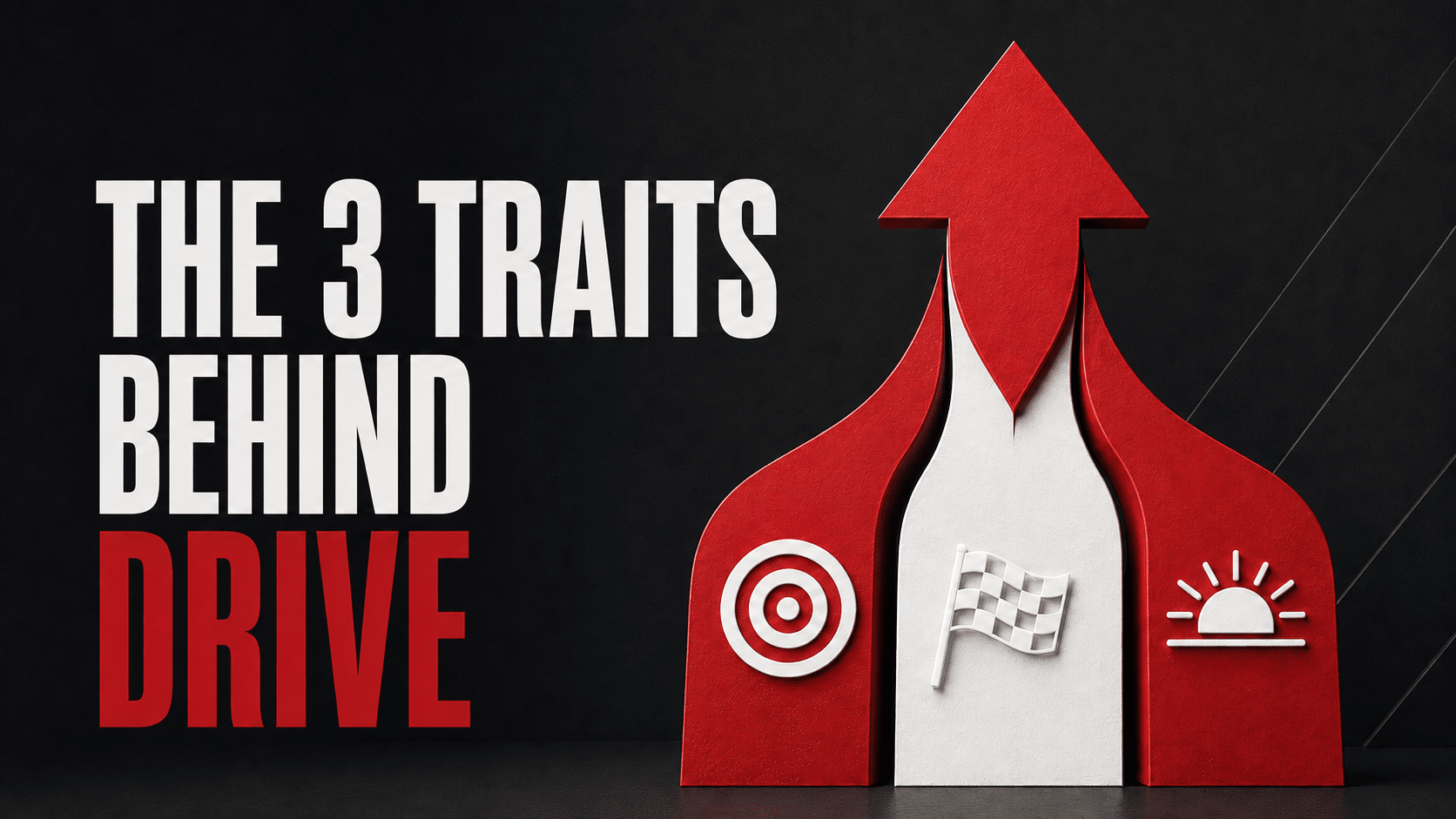
The single trait that most reliably predicts sales performance is Drive — a combination of three non-teachable characteristics: Need for Achievement, Competitiveness, and Optimism. Unlike sales skills, Drive can’t be trained. It has to be identified before you hire, through resume screening, structured behavioral interviews, and a validated sales assessment.
Here’s what that means for your hiring process, and exactly how to apply it.
Most Companies Are Solving the Wrong Problem
Most companies think they need better sales training. They don’t. They need better hiring.
The biggest predictor of whether a salesperson will actually produce isn’t experience, and it isn’t sales skill — it’s Drive. When you miss it in the hiring process, you don’t just make a bad hire. You create a revenue problem: a rep who ramps slowly, stalls out under rejection, and quietly drags down your pipeline for a year or more before you admit the mistake.
What Is Drive, Really?
In sales, Drive comes down to three measurable traits.
Need for Achievement – People high in Need for Achievement are wired to hit goals and then raise them. They measure themselves by outcomes, not effort. This is the trait that keeps a salesperson pushing for the next deal even after a big win, and it’s the one most closely tied to long-term, sustained performance. It’s also the hardest trait to spot, because people rarely describe themselves this way — you have to look for evidence of it in how they’ve actually behaved.
Competitiveness – Competitive salespeople want to win — not occasionally, but consistently. Being average isn’t acceptable to them. They enjoy going head-to-head against a competitor for a deal, and against their own peers for a spot on the leaderboard.
Optimism – Sales comes with constant rejection. Salespeople high in Optimism don’t stall when they hear “no.” They recover quickly and get back on the phone. This is the trait behind resilience, and it’s also one of the most extensively researched personality predictors in all of workplace psychology — more on that below.
Put those three traits together and you get someone who doesn’t wait for results. They create them.
Why You Can Train Skill, But You Can’t Train Drive
Here’s where most companies go wrong: they hire for teachable sales skills. They focus on resumes, years of experience, and how someone performs in a 45-minute interview. But interviews — and now even AI interview-prep tools — primarily measure how well someone can present themselves, not what actually drives their behavior over time. That’s a critical mistake, because skills can be trained. Drive can’t.
As one of our sales trainer clients told me: “If they don’t have the will, I can’t give them the skill.”
You can teach a process. You can teach a product. You cannot teach someone to push through resistance when it actually matters, week after week, month after month, for years.
This isn’t just an opinion — it’s grounded in decades of behavioral research. Psychologist David McClelland’s research on achievement motivation, developed at Harvard over three decades, found that people high in “need for achievement” set challenging but realistic goals, take personal responsibility for outcomes, and actively seek out feedback — precisely the behaviors that separate a top producer from an average one.
And when Martin Seligman studied optimism among life insurance sales agents at MetLife, he found that agents with the most optimistic explanatory style outsold their more pessimistic peers by a wide margin over their first two years on the job, while pessimists left the company at far higher rates. MetLife rebuilt part of its hiring process around that finding.
The traits we test for in The DriveTest® draw directly on this line of research.
What Happens When You Get This Wrong
It shows up directly in your numbers.
When Drive is low, your pipeline slows down. Opportunities stall. Performance is inconsistent. Revenue suffers, and you’re often twelve months into a bad hire before the pattern is undeniable.
When Drive is high, people ramp up faster, adapt faster, and produce consistently. That’s what actually fuels growth — not another round of sales training bolted onto the wrong person.
Every sales hire either accelerates your business or quietly drags it down. The real question you should ask in your interviews is never “did this person interview well?” It’s “will this person produce?”
And that comes down to whether they have Drive.
How to Identify Drive Before You Hire
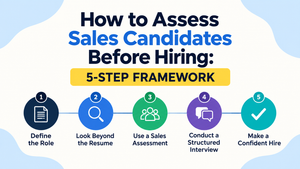
Identifying Drive before you hire is critical to make sure your investment in onboarding, training, and ramp-up actually produces the return you expect. Here’s the three-step process we use with clients.
Step 1: Screen the Resume for Drive Red Flags
A bad sales hire is like a stubborn weed in your garden — it steals time and resources that should go to your best people. Your first job is to get obvious mismatches out of the pipeline as early as possible, before they cost you real time in interviews and testing. A resume alone won’t confirm Drive, but it will flag candidates who probably don’t have it.
Serial job-hopping. A short-lived role or two early in a career is normal. Past that, a pattern of leaving every year or two is worth a hard look. It can point to a loyalty problem, poor judgment in vetting opportunities, or a track record of underperformance the candidate is trying to outrun. The best predictor of future behavior is still past behavior — ask directly about the reasons for each move.
The “big fish in a small pond” resume. Growing companies often fall for a candidate with an impressive track record at a large, well-known firm. Before you get excited, find out whether that success came from the candidate’s own initiative — or from the brand name and marketing budget doing the heavy lifting. A candidate who has only closed warm, inbound leads at a recognizable company may not be ready for a true hunter role at a company still building its name.
Typos and sloppy formatting. The resume is a candidate’s best opportunity to make a strong first impression. Candidates high in Drive — particularly Need for Achievement — tend to proofread obsessively. If their best foot forward has careless errors in it, that pattern rarely improves once they have the job.
Step 2: Ask Structured Behavioral Interview Questions
Not hypotheticals — real patterns of behavior. Ask what someone actually did the last time they faced rejection, pushed past a goal, or hit real resistance. That’s where Drive shows up, and it’s far harder to fake than a rehearsed answer about “how I’d handle” a hypothetical situation.
To vet Need for Achievement:
Ask: “What kinds of sacrifices have you made to be successful?”
Listen for concrete, substantial sacrifices — time, other pursuits, comfort — made specifically in pursuit of a work goal, not a generic answer about “working hard.”
To vet Competitiveness:
Ask: “Tell me about the last time you were genuinely competitive at work.”
Listen for a specific story about competing with coworkers or a competitor for a deal, told with real energy. The candidate should describe the competition itself as motivating and enjoyable, not stressful.
To vet Optimism:
Ask: “Tell me about a sale where you stayed persistent even after everyone around you had given up.”
Listen for a story about staying resilient after real rejection — a prospect going cold, a colleague calling the deal dead — and sticking with it anyway. If the candidate lacks sales experience, listen for a comparable story from school, sports, or another job.
Step 3: Validate With a Structured Sales Assessment
If a candidate’s resume holds up and they check out on the phone, it’s time to apply a rigorous, validated sales assessment built specifically to measure Drive.
Structured assessments matter because they measure Achievement, Competitiveness, and Optimism objectively — instead of relying on gut feel, which is exactly what a well-coached candidate is trying to manipulate. Testing doesn’t take the human element out of hiring; it protects it, by making sure the “chemistry” you feel in the room is backed by evidence.
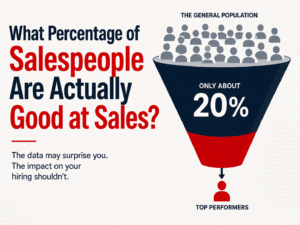
A good sales assessment can identify Drive with 80% or higher accuracy. And since fewer than 20% of the general population is actually high in Drive, confirming it early is one of the single highest-leverage things a hiring manager can do.
Once Drive is confirmed, then you can spend your interview time on the things that are subjective — culture fit, management style, and the nuances of the role — because none of that matters much if the candidate isn’t driven in the first place.
The Bottom Line
If you’re serious about growing revenue, this isn’t a small hiring adjustment — it’s a leverage point. Every sales hire either accelerates your business or quietly drags it down, and the difference almost always comes down to Drive.
Ready to See How This Works in Practice?
Try The DriveTest free and see exactly how we measure Drive in a candidate before you ever extend an offer.
Frequently Asked Questions
Drive is a combination of three personality traits — Need for Achievement, Competitiveness, and Optimism — that research and field experience consistently link to long-term sales success. It’s considered the single strongest predictor of sales performance, ahead of experience, product knowledge, or interview polish.
No. Sales skills — prospecting technique, discovery questions, objection handling, closing — can absolutely be taught. Drive is a foundational personality trait, not a skill, and training does not reliably create it in someone who doesn’t already have it. That’s why it needs to be identified prior to hiring.
Based on our assessment data and research at SalesDrive, fewer than 20% of the general population scores high in Drive. That scarcity is exactly why screening for it early — before you invest interview time, training dollars, and territory — gives hiring managers such a significant advantage.
A well-validated, sales-specific assessment can identify Drive with an 80% or higher accuracy. Generic personality tests are not built to isolate Drive specifically and are far less reliable for this purpose.
Sales skills are teachable behaviors — how to run discovery, structure a demo, or how to follow up. Drive is the underlying motivational engine that determines whether someone will actually apply those skills consistently, especially after rejection or during a slow quarter. You can hire a highly skilled candidate with low Drive and still get inconsistent results.
About the Author: Dr. Chris Croner is a clinical psychologist and Principal at SalesDrive, LLC. He developed The DriveTest® sales assessment and is co-author of Never Hire a Bad Salesperson Again. He has helped more than 1,500 companies worldwide identify and hire top-performing salespeople. Connect with him on LinkedIn.